Film students gencrop

Screenwriting and Producing

BA (Hons) with Foundation

Programme details

  • Study: Full-time
  • Duration: 4 years with Foundation
  • Fee: See fees tab
  • UCAS code: A035
  • Study abroad: Optional

Overview

Put your screenwriting skills into action

By developing a dual skill set of screenwriting and producing, you’ll not only learn to write scripts that work, but also bring them to life on screen. We’re only a small course, yet the level of industry success amongst our graduates and teaching staff is staggering – and with our expert guidance and top-level connections, you can join them.

Discover some of the incredible films our alumni have created as they make their mark in the industry.

Graduate film posters

You'll experience

  • Hands-on learning: write and produce your own scripts and films
  • Highly successful teachers: learn from an Oscar nominee and a BAFTA winner
  • A prime location: study on the doorstep of London’s film festivals and studios
  • Industry-standard facilities: get to grips with professional equipment and software
  • Cross-course collaboration: bring your script to life with film and acting students
  • Exclusive opportunities: including a complimentary ticket to the London Screenwriters’ Festival, hosted here at Regent’s

Why Regent’s?

Discover more about what makes Regent's special.

New film takes Regent's graduate filmmaker to Sundance Festival

What to expect

On this course, storytelling is at the heart of everything you do. You’ll develop your voice as a screenwriter, gain practical production skills, and combine these elements to put your scripts into action.

Building up from a short script to a full feature-length screenplay, you’ll develop your creative and technical skills each year. Alongside screenwriting, you’ll experience a range of production roles as you bring your scripts to life on screen, and learn how screenplays are written and function in real industry settings by studying existing films and scripts.

Collaboration is a crucial part of the course. You’ll form crews with other film students, mirroring real industry practice as you utilise each other’s specialist skills. You’ll also learn from guest speakers and benefit from Regent’s strong screenwriting profile – including getting a complimentary ticket to the London Screenwriters’ Festival, which is held on campus.

At Regent’s, learning isn’t limited to our campus. You’ll enjoy field trips around London, to Brighton, and to the Aesthetica Film Festival in York to inspire your work and advance your understanding of the industry. You’ll also get the chance to study abroad for a term in Year Two, with a limited number of places available each year at the prestigious Vancouver Film School.

You’ll graduate from Regent’s with a professional portfolio of lasting value, including original scripts and a high-quality short film, ready to showcase your talent and make your mark in the industry.

Industry-standard facilities

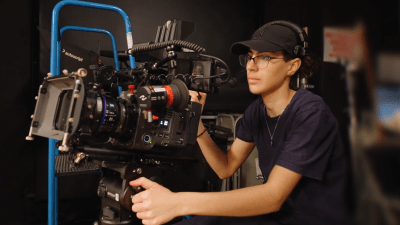
To help make your projects the best they can be, you’ll have access to the same professional equipment, software and tools used in the film and television industries. These include:

  • Red, Sony Venice, Canon and 6K Blackmagic cinema cameras
  • Zeiss Compact Prime and Tilta Wireless Follow Focus lenses
  • ARRI SkyPanels, Dedolights and Celeb lighting
  • Professional sound mixers and 5.1 surround sound audio mixing suite
  • Accsoon CineView wireless video transmission systems
  • Camera stabilizers (Glidecam and Steadicam)
  • Multicamera live TV studio and gallery
  • Editing suites, podcasting studio, colour grading studio and ADR room
  • Free Adobe Creative Cloud licence, Da Vinci Resolve Studio (editing software), Final Draft (professional screenwriting software) and Epidemic Sound subscription

Robert McKee screenwriting scholarship

Globally renowned screenwriter, Robert McKee, is a friend of the course and partners with us to provide one student per term a scholarship of £7,000 towards your fees.

‘Stories live inside us all. Too often, talented writers from diverse backgrounds remain unnurtured and lost. I’m thrilled to partner with Regent’s University London and give voice to those yet to be heard.’ 
– Robert McKee

London-centric learning

London is the UK’s hub for film and screenwriting. Here, you can engage with all aspects of the sector, whether it’s attending film premieres, getting practical experience in studios, or building relationships at specialist networking events. You can:

  • Attend the London Screenwriters’ Festival, hosted at Regent’s
  • Work with London-based studios like Abbey Road Studios and Ealing Studios
  • Go on field trips to useful exhibitions, museums and more
  • Film on location in one of the world’s most iconic capital cities
  • Do placements with London-based organisations – previously, students have worked at the BBC, ITV, BFI, independent production companies and West End theatres

A tailored experience 

We put you in the driving seat, making sure you have access to all the support and opportunities you need. You’ll benefit from:

  • Your own support officer: receive tailored advice and support when needed
  • Academic guidance: have regular one-to-one tutorials
  • Flexible modules: personalise your course with a choice of special electives
  • Additional language classes: prepare for domestic and international opportunities

Foundation year

In your Foundation year, you'll gain a solid grounding in academic skills and principles, as well as an introduction to your chosen subject area. It will provide a rich and varied experience to ensure you’re prepared for degree-level study in the UK – ready to develop specialist knowledge and confidently make the most of your course.

Some modules will be taken with students heading towards the same or related subject areas, while others will be taken with a blend of students – enabling you to mix with peers who bring a range of different perspectives and experiences to the classroom. You’ll take two modules related to your subject area and eight shared modules covering key skills like communication, critical thinking, cultural understanding, politics, data, creativity and entrepreneurship.

Once you’ve successfully completed your Foundation year, you’ll directly progress to Year One of your chosen degree-level course.

Download course specification.

Student, graduate and staff work and achievements

Line Langebek Oscars
Nominated writer – Lecturer, Line Langebek, at the Oscars
Line Langebek EFA
Nominated writer – Lecturer, Line Langebek, at the EFA
Granatë – Ornela Peka
Finsta – Lucia Debernardini
The Delusionist – Florencia Casas
College Romance – Isabelle Sieb
Finsta – Lucia Debernardini – Screenwriting and Producing
Finsta – Lucia Debernardini
New Factory – Pamb Down – Screenwriting and Producing
New Factory – Pamb Down
Eye Exam – Luis Garcia – Screenwriting and Producing
Eye Exam – Luis Garcia
Special Delivery – Luis Garcia – Screenwriting and Producing
Special Delivery – Luis Garcia
Film & Screen students

How to apply

Applying to Regent's is quick and easy. We accept direct applications year-round and there's no application fee. If you haven't received your exam results, you can still apply and we'll issue you with a conditional offer. You just need be clear in your application which qualifications you're currently studying for.

Step 1: Apply

  • On our website, details here
  • Through UCAS  (The Regent’s UCAS code is R18)

During the application process, you'll have the chance to upload supporting documents, including:

  • A copy of your passport (photograph ID page)
  • Academic transcripts and certificates from all previous studies
  • A 300-500 word personal statement (view guidance)
  • If you're not a native English speaker, proof of your English proficiency (take our test)

Credit transfer

If you’ve already studied part of your degree elsewhere, you may be able to apply for Recognition of Prior Learning (RPL) and join your new course at an advanced entry point. To apply for RPL, you'll need to state this clearly in your application and provide us with the certificates, transcripts and module descriptions for your previous course.

Step 2: Receive a response

You can expect to receive a decision on your application within 10 working days. We'll assess whether you meet our entry requirements and will notify you of our decision via email. UCAS applicants will also receive official notification via the UCAS system.

For some of our courses, the selection process may include an interview or audition. They can take the form of a one-to-one interview, a group interview or a portfolio review, which may be conducted by telephone or online. Arrangements of these are made between you and the Admissions department.

Step 3: Accept your offer

If you wish to accept your offer, you must pay your (non-refundable) advance tuition fee deposit. This will confirm your place. Here's how.

Step 4: Register 

Closer to the start of term, our Admissions team will send instructions regarding your registration process. This will include information on completing your online enrolment before you arrive, as well as a checklist of documents you'll need to bring with you to campus.

Information for international students

If you're an overseas student, you'll likely require a visa to study in the UK. Here's how to apply.

Scholarships and funding

In partnership with Robert McKee, the world's most in demand screenwriting lecturer, we're proud to offer one student a screenwriting scholarship – with £7,000 towards your fees and a place at Robert's STORY Seminar and at the London Screenwriters Festival. For more opportunities, please visit our scholarships and funding page.

Fees

Tuition fee:

  • September 2025 or January 2026 start: £23,000 per year, fixed for the duration of the course
  • September 2026 or January 2027 start: £24,500 per year, fixed for the duration of the course

Non-refundable advance deposit:

September 2025 or January 2026 start

  • UK students: £1,000
  • Non-UK students: £4,000

September 2026 or January 2027 start

  • UK students: £1,500
  • Non-UK students: £5,000

Read more about tuition fees.

When do I need to pay?

If you receive an offer for a course, you’ll receive a pro forma invoice. To accept your offer and secure your place, pay your deposit payment as soon as possible.

The remaining portion of your first year’s tuition fees will be due when you enrol. At this time, you’ll receive your invoice for the full year. You can choose to pay for the year in full before the start of your first academic year or in two instalments, spread out across the academic year. The dates of these instalments will be determined by when your course starts.

What do fees include?

Fees cover the cost of all tuition and access to the University’s IT infrastructure and library learning resources. Fees are presented for the first level of study which equates to two terms.

What other costs should I budget for?

You'll have access to an extensive range of production equipment and postproduction resources to loan – however, we advise all students acquire their own personal 1 – 2TB Portable External Hard Drive to save and store work. This should cost less than £100.

You'll also need to budget for accommodation and living expenses, travel, and any additional trips, visits, activities or courses that you choose to participate in outside of the tuition offered as part of your course.

The library holds a limited number of copies of core textbooks and where possible in e-format. You will be encouraged to purchase your own textbooks and will need to budget approximately £80-£100 per year, depending on your course.

How you'll learn

At Regent's, you’ll have the freedom to explore screenwriting and producing in a supportive, collaborative environment with regular one-to one contact with academics, hands-on classes, and some of the best networking opportunities you can get – helping you develop the skills and confidence you need to succeed. Your learning will be underpinned by real-world experiences, so you can see what the industry is like and hear what it has to say.

In your first year, you’ll write a short script followed by a 30-minute screenplay, while building core production skills. 

In Year Two, you’ll progress to an hour-long script and deepen your understanding of the producer’s role, supported by experiences such as attending the Aesthetica Film Festival. You’ll also go on a study trip to Brighton for inspiration, networking and industry insight, and you can choose to study abroad for one term. 

In your final year, you’ll take on your most ambitious project: developing a feature-length screenplay and creating a short film in collaboration with Film & Screen Production students, taking on both writing and production responsibilities.

You’ll learn through a blend of:

  • Seminars and workshops, where you’ll get to grips with key themes, collaborate with other students and participate in script readings
  • Practical demonstrations for getting to grips with using industry-standard production equipment and software
  • Field trips to Brighton for team building and inspiration, and to the Aesthetica Film Festival for networking and gaining industry insight
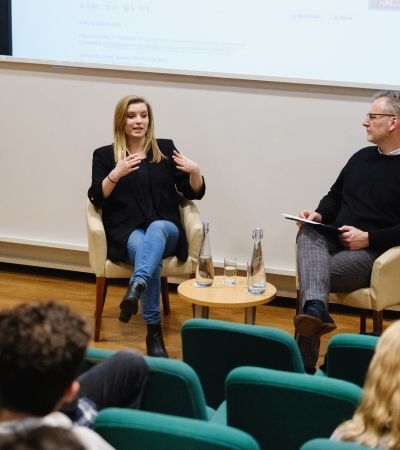
  • Guest talks from active industry professionals and inspiring Regent’s alumni

Contact hours

You’ll have 12-18 hours per week of timetabled teaching. Outside your classes, you'll work on projects independently and collaboratively with fellow students, and complete further reading, research and reflections.

Teaching staff

You'll be taught by active, high-achieving film and screenwriting professionals, including an Oscar-nominated screenwriter, Line Langebek. Other members of our teaching team have collaborated on international feature films, helped produce award-winning documentaries, and had work screened at the Super Bowl and the British Film Institute (BFI). They bring their industry experience directly to the classroom and provide you with fantastic networking opportunities.

You'll regularly meet with an Academic Advisor on a one-to-one basis, making sure you’re getting the most out of your course.

The team includes Phil Hughes, Line Langebek, Roxy Dunn, Tristan Tull, Mike Peel, Robert Freeman.

Assessments

Since BA Screenwriting and Producing is a highly practical course, you’ll be assessed on your written scripts, produced films and a script reader’s report (synopsis, analysis and editing of an existing piece of material). It's important to us that your learning is inclusive, engaging and authentic – that’s why our assessment types are varied, dynamic and built around real-world ways of working.

Disability support

We welcome and support students with a wide range of disabilities and health concerns. Please speak to us as early as possible so we can support you as best we can.

Academic requirements: Foundation entry

We're interested in your potential, as well as your prior achievements – and review each application comprehensively on its own merit.

One of the following qualifications:

  • 5 GCSEs at grade A-C or equivalent or Grade 5 average
  • US High School (Year 11) with a minimum GPA of 2.3/4.0 or completed diploma with a minimum GPA of 2.0/4.0
  • 24 points in the International Baccalaureate (Year 1)
  • Equivalent qualifications as deemed acceptable by the University and set out in the Admissions Guide and UK ENIC.

For more guidance on international entry requirements, visit our international students page.

English language requirements

Minimum English proficiency requirement through one of the following qualifications (or equivalent): 

QualificationSubjectGrade
GCSE*English languageC (4)
IB SL or HL*English A4
IB HL*English B4
US HSD (studied in a majority English-speaking country)*Grade 11 and above EnglishD
IELTS*Academic5.5 overall and 5.5 in each component

Please note, we do not accept home/online editions of English language tests.

We also offer our conditional offer holders a free, online diagnostic test known as Password Skills Plus. This must be booked in advance. Discover more.

*Qualification satisfies the English language requirements of the UKVI for non-UK/Irish nationals.

Academic requirements: Year 1 entry

We're interested in your potential, as well as your prior achievements – and review each application comprehensively on its own merit.

One of the following qualifications:

  • Two GCE A-levels at grade A-C
  • 24 points in the International Baccalaureate
  • US High School Diploma with a minimum GPA of 2.5 PLUS one of the following:
    • Two AP tests with an average grade of 3
    • SAT score of 1000 (500+ in both subjects)
    • ACT with a composite score of 23 (20 in each section)
    • Dual Enrolment and College credits (1st year) – 20, with a GPA of 2.5 or higher
  • Equivalent qualifications as deemed acceptable by the University and set out in the Admissions Guide and UK ENIC.

For more guidance on international entry requirements, visit our international students page.

English language requirements

Minimum English proficiency requirement through one of the following qualifications (or equivalent):

QualificationSubjectGrade
GCSE*English languageC (4)
IB SL or HL* English A4
IB HL*English B4
US HSD (studied in a majority English-speaking country)*Grade 11 and above EnglishC
IELTS*Academic6.0 overall and 5.5 in each component

Please note, we do not accept home/online editions of English language tests.

We also offer our conditional offer holders a free, online diagnostic test known as Password Skills Plus. This must be booked in advance. Discover more.

*Qualification satisfies the English language requirements of the UKVI for non-UK/Irish nationals.

Careers

Screenwriting and Producing students step into all kinds of roles within the film and television industry, from pre- to post-production. These range from script readers, editors and writers to floor crew, producers and directors. Whatever you choose, your in-depth knowledge of screenwriting will support your work.

Our graduates include the Associate Producer on BAFTA-winning film Kneecap, the director of Emmy Award-winning and BAFTA-nominated series Vigil, and the producer of Emmy Award-winning George to the Rescue. We have alumni who run their own talent agencies, have written films on Amazon Prime, work in mainstream television, develop projects for Netflix, and have won an impressive number of screen awards across the globe.

Inspiring alumni include:

  • Isabelle Sieb: Emmy award-winning, and RTS and BAFTA-nominated director, working with Sky, BBC and Amazon
  • Helga Bryndis Ernudottir: producer at Sony Los Angeles
  • Jacob Lee Johnson: Emmy award-winning producer, story developer and editor
  • Priya Giga: Comedy Development Exec at Netflix
  • Rollo Wolrige Gordon: Senior Agent and MD at RWG Management

While this course naturally feeds into film and television roles, the transferable skills you develop can benefit you in any career you choose.

Graduate visa

After you've completed your course, you may be eligible to apply for a Graduate visa. This enables you to work, or look for work, in the UK for up to 18 months after you leave Regent's, without the pressure of having to secure a job immediately – applying your skills and advancing your career with valuable experiences and industry connections.

Careers support

Life after graduation can be daunting. Don't worry if you feel overwhelmed – our Careers team is here to provide personalised advice, and you’ll get access to our useful employability resources for life. Benefit from:

  • 24/7 access to online guidance and resources
  • Exclusive internships, networking opportunities and industry events
  • Personalised consultations – from interview and CV prep to business advice
  • Access to Handshake, connecting you with 650k+ global employers

Your course modules

We've designed our curriculum for you – expanding your knowledge, skills, practice and thinking with three building blocks:

  • Subject Core
  • Special Electives
  • Common Modules, including Industry & Entrepreneurship

Read more about how you'll learn and view a complete list of Special Electives. Please note, all Special Elective modules are subject to availability.

View your academic calendar.

Integrated Foundation option

Liberal Arts and Media Foundation

Term 1
Liberal Arts and Media Part I This module will introduce you to the interdisciplinary Liberal Arts ethos. You will engage with the greatest thinking from the arts, humanities and social sciences and examine pressing global issues from various perspectives. You will begin your introduction to essential subject skills and knowledge in preparation to continue onto an undergraduate course. It will also help support you to develop your study skills and abilities in academic English. This module is designed to be taken in conjunction with Part II in your second term of study, where the focus will be on acting, film and media production.
Writing for Success at University This module develops your writing skills and knowledge, to prepare you for success at university. You will consider writing as a process that is shaped by your knowledge of genre, audience and purpose – and you’ll learn to identify common features of successful academic writing.

Engage with motivating writing challenges that support the skills required in the Foundation, and the skills you will need to complete written tasks at degree-level. You will explore aspects such as style, register, structure and referencing, and learn to harness digital tools to aid your writing. In this module, you will take on board feedback and use it to develop further. You will also reflect on the overall process of becoming a more proficient academic writer, all within a supportive classroom atmosphere.

As a result, you be able to approach your assessment tasks with confidence, demonstrating your learning in written tasks across your studies.
Critical Thinking In a world of conflicting ideas and the advent of "post-truth" and "fake news", being able to think critically and investigate information is crucial. This module is designed to improve your critical thinking and reflecting skills. You will learn tools that will help you evaluate information, investigate what is true, differentiate between opinion and fact, and determine strong arguments from weak. Understanding how we know what we know is one of the most fundamental aspects of university education and, in this module, you will develop a foundation in decision-making and reasoning that will help you academically and in your future career.
Cultural Understanding In this module, you will study a range of cultural industries – contemporary, historical, local and global. You will trace how ideas develop in different cultural industries from inception to materialisation, explaining the values that underpin cultural output. You will develop your understanding of the role that curiosity and creativity have played in the development of culture and the technologies used within the cultural landscape. You will consider decision-making processes, gaining an understanding of how cultural industries are created, how culture is mediated and produced, and what impact it has on its human and physical environments. The module will encourage you to engage with specific case studies, and provide a broader understanding of the social, political and economic contexts that contribute to the place of culture in society.
Politics, Society and Citizenship In this module, you will be introduced to the basic principles of politics, society and citizenship. What is society, and how is it shaped by politics? Who are we as citizens? You will explore your political values by examining some real-world problems and debating with other students about how to deal with them. By working with other students, you will explore how political engagement works within and across societies. By the end of the module, you will have the tools to develop a more critical and thoughtful attitude to citizenship, which you will take forward for the rest of your life.
Term 2
Liberal Arts and Media Part II In this module, you will continue to build on the interdisciplinary Liberal Arts ethos, subject skills and knowledge gained in Part I. You will begin to explore performance, film and media production and examine pressing global issues from various perspectives in these fields. The module will further help support the development of your study skills and abilities in academic English for degree-level study.
Communications Communication is the power to inform, persuade and bring people together to enact change. Whether verbal, non-verbal or written, communication is key to your success in university and future career. This module will enable you to improve your own communication and to evaluate the way communication works to convey ideas.

Taking an active approach, you will work through complex stories and messages, finding new ways to communicate simply, clearly and effectively. You will practice observation, understand and evaluate context, and learn to empathise with your audience to craft persuasive and professional outputs.

Reflecting on culture and identity is an important part of understanding the communication environment. You will work with and draw on your own experience, and that of your peers, to acknowledge differences and find connections. You will use collaboration and networking to help develop an individual final output that may use a variety of media.
Cultural Industries In this module, you will study a range of cultural industries, whether contemporary or historical, local or global. Tracing how ideas develop from inception to materialisation in different cultural industries will enable you to explain the values that underpin cultural output. You will develop your understanding of the role that curiosity and creativity have played in the development of culture and the technologies used within the cultural landscape. By considering decision-making processes, you will gain an understanding of how cultural industries are created, how culture is mediated and produced, and what impact it has on its human and physical environment. The module will encourage both an engagement with specific case studies and a broader understanding of the social, political and economic contexts that contribute to the place of culture in society.
Creativity and Entrepreneurship In a business environment, creativity is most often defined as the ability to imagine the unique ideas whilst innovation is defined as the process that transforms the creative ideas into real commercial product or services. Starting from this point of view, this module will help you to critically evaluate how creativity contributes to successful entrepreneurship practice.

Today’s organisations are aware of the importance of entrepreneurial and managerial creativity as a desired behaviour in identifying opportunities that lead to entrepreneurial success. In this module, you will have the opportunity to understand the role of managerial creativity for growth and wellbeing of organisations and in society.

You will cover topics such as innovative organisations; entrepreneurial creativity and decision making; transformational leadership; creative behaviour; employee innovation; and engaging with the creative process in the workplace.
Making Use of Data Data are all around us and play a crucial role in decision-making at all levels and sectors. The analysis and visualisation of data is a key skill in today’s job markets. It is not only the foundation of efficient organisations, but a means unlocking critical insights to inform present and the future operations.

In this module, you will gain a conceptual appreciation of the nature of data in its many forms, and how we use it to enhance daily working processes. You also gain an appreciation of the ethical issues around data governance and representation.

You will gain practical knowledge in data analysis by exploring the broad ecosystem data analytics platforms, and by building up key skills in Microsoft Excel, the most popular data analytics platform in the world. Throughout a series of applied sessions, you will use these skills to effectively explore, visualise, and analyse data of all kinds.

Year 1

Subject Core

Screenwriting and Producing
Visual Storytelling This module introduces you to the principles of screenwriting through the development of an original film script. You will learn the basics of script layout, formatting and key terms. At the same time, you will develop an understanding of the process of script planning and development, from conception of idea through logline, outline, treatment and scene breakdown to early part-drafting and refinement of the work. The module examines the arenas of theme, intent and expression, and introduces you to the oral and written pitch and presentation. You will learn about to the concept of the pitch deck and have an opportunity to visualise, package and create a marketing tool for your original script.
Visual Forms This module will enable you to explore a range of production formats including studio, outside broadcast and factual filmmaking.

A solid understanding of these will inform the creative production skills you need to harness in order to develop for your own storytelling potential.

At the same time, by experiencing the range of available forms, you will choose which mode of filmmaking you wish to pursue in order to create an assessed project.
Thirty-Minute Script This module develops your understanding of script craft, and supports you to create an original half-hour script.  It introduces you to the challenge of inventing an original story for the screen. Through the script development process, you will write a screenplay that demonstrates appropriate skills in crafting, developing and rewriting in order to realise a viable, producible and professional thirty-minute script.  Skills will include deployment of narrative structure, plotting, relevant use of characterisation, use of arena and an understanding of the relevance of genre and form.
Production Skills This module will develop your media literacy, essential for supporting your academic and professional development. You will learn the basics of genre and narrative structure in drama as well as the principles of reportage.

You will build specialist production skills in the areas of camera, sound, lighting, directing, producing and editing. Short group projects will develop your ability to create narratives in both drama and factual production, as well as key teamworking skills.

By the end of the module, you will have gained a practical understanding of production techniques and associated roles.
Exploring Industry and Entrepreneurship The world of work is changing fast; in some sectors, AR, AI and automation have already mechanised the work environment. New and different jobs are rapidly being created, generating fresh industry-related and entrepreneurial opportunities. Global crises have accelerated trends, causing many sectors to rethink their approaches to work.

This module provides you with an introduction to the changes being experienced, and the scope of real-world professional activities in relation to your course. Teaching will be delivered by your course team, led by subject experts, and tailored to reflect industry and entrepreneurship in your discipline.

You will develop an understanding of how changing local and global trends impact the current and future worlds of work. The focus will be on exploring your industry or sector and its future, with a view to informing your own potential career or entrepreneurial journey.

In this module, you will be supported by the experts in the Careers, Enterprise and Industry services and the university careers platform, Handshake.
Learning Perspectives This module will encourage you to become a collaborative, critical and reflective learner. Using the distinct lens of your course, you'll examine core questions about how and why we learn the way we do and develop skills essential for university study.

Common Modules

In Year 1, you can choose a mix of London Perspectives, Global Perspectives and language modules – you'll need to take two in total from the lists below.
London Perspectives This interdisciplinary module will introduce you to the relationships between a range of subject areas, including your own academic specialism, and London. Subject areas addressed may include art, business, fashion, film, media, advertising, history, marketing, music, politics, psychology, religion, theatre and literature. You'll encounter specific contributions that London and Londoners have made to each of these fields, as well as consider how practitioners in each area have shaped the physical and intellectual landscape of the city that we know today – enabling you to explore the connections between your academic studies at Regent’s and the wider professional, cultural and civic contexts to which those studies contribute.
Global Perspectives This module asks you to reflect on one of the most important questions we face: how can we work together to improve the communities we live in? You'll explore a range of contemporary intercultural, political, ethical and social issues that demand collective solutions – working in groups with students from different disciplines and from diverse cultural backgrounds to generate solutions to local dilemmas and global challenges. You'll be required to reflect on this process and develop your understanding of how teams work and how our individual contributions and choices affect the dynamics of the team. You'll consider the benefits of practising empathy and explore the increased potential for arriving at creative solutions when working with people who have different perspectives.
Language Modules
Languages (Grades 1-6) – available Autumn and Spring Choose between Arabic, Chinese, French, German, Italian, Japanese, Russian and Spanish – all languages are offered from beginner to advanced level in every term.

Languages provide you with tools to understand and imagine new worlds and communicate with others. Learning a language opens the door to cultures beyond your own and allows you to bridge the gap between communities and build connections for your life and your career. 


At Regent’s, you will learn languages differently. You will learn in a highly practical way, in order to develop skills for authentic communication. At Regent’s, you will receive individual attention in a supportive atmosphere and learn through collaboration and innovative teaching methodologies.  


Whether you want to start learning a new language, develop existing proficiency or prepare yourself to study abroad, these modules will help you develop a multilingual identity.   
Advanced Language for Professionals (Grade 7)  – available Autumn or Spring If you want to work in international or multilingual environments and you already have a higher intermediate level of Arabic, Chinese, French, German, Italian, Japanese, Russian or Spanish, this module is for you.  

You will learn to apply your existing language skills to the workplace and acquire the practical and linguistic tools to connect, collaborate and communicate effectively in multicultural professional settings.  

Learning in small groups, you will gain knowledge of the countries where the language is spoken and of their work practices and will apply that knowledge to tasks that resemble those in the workplace. You will also develop job-specific linguistic and cross-cultural skills and explore contemporary forms of communication at professional levels. 

Immersed in a unique classroom environment that embodies Regent’s cosmopolitan character, you will experience individual attention in a supportive atmosphere, learn through innovative teaching methodologies and develop your multilingual professional identity. 

Business English: Professional Writing – available Autumn or Spring Every professional journey will benefit from enhanced writing skills allowing you to express yourself and persuade others.  Classes provide opportunities to create written texts (such as work emails, letters, proposals and reports) while developing understanding of writing as a process and how to adapt writing for diverse audiences and purposes. At the same time, you will also consider the impact of choices around tone, style, formality and other key language aspects.  

This module offers a memorable experience of professional writing, harnessing technology use (such as digital word lists, text analysers) and formative feedback, all within a supportive classroom atmosphere.  

As a result, you will be ready to apply what you learn to tasks on this module in your university course or career. You may only take this module once.
Business English/Advanced Business English  – available Autumn or Spring For every prospective 21st century professional, higher-level business English skills are indispensable.  

Whether you study acting or psychology, business or fashion design, this module will develop business English knowledge (grammar and vocabulary) and skills (listening, speaking, reading and writing) at upper-intermediate and advanced levels, to enhance your fluency, persuasiveness and effectiveness as a global communicator.   You may only take these module once.

Classes provide opportunities to engage in motivating linguistic challenges (such as discussions, presentations and reports). You will select and introduce business topics of interest and enjoy multiple opportunities for formative feedback, all within a small group, supportive classroom atmosphere.   

The sessions will encourage you to reflect throughout, helping to improve confidence through tasks designed to showcase the full range of business English skills required for success in your future career.   

Advanced Spanish through Film (Grade 8)  – available Autumn or Spring Comics, films, social media posts...we live in a multimodal world where information is conveyed through combinations of visual, written, and spatial modes. If you already have a higher intermediate level of Spanish and wish to develop an ability to understand how images are created and ‘read’, this module is for you. Through close study of a range of films and television series produced in Latin America and Spain, you will enhance your understanding of the sociocultural reality of those countries. You will become familiar with the multimodal framework and apply it to the analysis of audio-visual texts. You will also acquire practical and linguistic tools to discuss and analyse in Spanish, and with a certain level of complexity, any audio-visual product. In addition to expanding on your existing linguistic skills, this module will help you develop new and highly valuable media literacies that can be easily transferred to your subject.

Year 2

Subject Core

Screenwriting and Producing
The Creative Producer This module will introduce you to the world of the creative independent producer. The module will explore script analysis, IP, adapting for the screen and packaging projects for the market. In your assignments, you will practice both the creative skills of the writer and those of a business-focused production professional.

The module requires you to attend a relevant short film festival, after which you will research a participating film and produce a short case study in order to contextualise your own filmmaking ambitions.

A key element of the module is the development of team-working, presentation and listening skills: in particular, your ability to put forward logical arguments to support individual perspectives and to consider and reflect analytically upon the opinions expressed by others.
Showrunner: Series Concept This module is designed to encourage you to develop your voice as a writer.

You will be expected to conceptualise a prospective series or limited series. You will develop a series bible which outlines the key elements, including series overview, character profiles and market positioning. You will also develop a pitch deck, visualising the proposed style of your series and highlighting the potential audience and marketplace for the series idea.

In particular, the module aims to develop writing and story creation skills required in the one-hour form, using developed story devising, multi-plotting and ambitious use of characters. The module will also require you to engage in subject research.
Showrunner: The Pilot This module enables you to develop your screenwriting skills to express your work through refined use of plots, character functions and exploration of arena, dialogue, montage, timeframe and other developments in your writing expertise.

You will be writing a one-hour pilot screenplay for an original series or limited series. You will be expected to draft and re-draft your work in order to understand the level to which a working writer would be expected to produce work in a professional context.
In Year 2, you will also choose one of the following Experiencing Industry & Entrepreneurship modules:
Entrepreneurial Challenge Regent’s University London has been quoted as the UK university with the highest density of business founders. In this module, you will develop entrepreneurial thinking about how to grow your own or others’ entrepreneurial ideas.

You will have the freedom to choose between a range of entrepreneurial challenges and explore enterprise opportunities. In doing so, you will develop your own concepts and create an entrepreneurial plan. In collaboration with others, you will develop your entrepreneurial ideas through creative thinking, research and evaluation.

At the end of the module, you will pitch your idea, bringing your concepts closer to an exciting reality. If you have true ambitions to become a founder, the module will also prepare you to complete an individual entrepreneurial project in your final year.
Placement This placement module gives you the opportunity to experience industry and entrepreneurship in an external organisation. Through an immersive piece of work, either within or outside of your discipline, you will apply your knowledge and intellectual and practical skills to real life challenges to develop a critical appreciation of how an organisation operates and evolves.

These insights, skills and knowledge will not only prepare you for your next level of study, but they will also help you to build the attributes required to realise your future ambitions after graduation.
Industry Challenge In this module, you will experience the challenge and pace of the world of work through a real world or live project, chosen from a menu of industry scenarios. This will give you an insight into the culture, practices and commercial contexts of an industry, field or sector within which the project is situated.

The focus of this immersive experience will be on process, as you engage in team building, collaboration and project management, researching and testing concepts and presenting your concepts to address the industry challenge.

The module will support your personal and professional development so that, when you move into the final year of your course, you will be equipped to complete a significant individual project of your choice.
You can also choose to study abroad:
Study abroad term In your first year, you'll be invited to participate in a study abroad term which takes place in Year 2. Depending on your course, you'll have a choice of 60+ partner universities in over 20 countries around the world – immersing yourself in a new culture and meeting students from all walks of life. To join, you must meet our entry criteria. There are no extra fees and it doesn't delay your graduation at all. You'll receive dedicated support from the International Office throughout. For more information, visit regents.ac.uk/outbound or contact [email protected].

Languages and Special Electives

Module title
Special Elective 1 You can choose from: Creativity and Imagination; Being Human; Creating a Brand Identity; Why We Post: Social Media and Us; Financial Innovation and Technology; Photography Workshop; How to Think in a Post-Truth World; Understanding Human Rights; Literary London; Behind the Lens: Introduction to Media Production; Psychology of Emotions; London as Fashion Capital; Emerging Technologies: from Web3 to the Metaverse; Digital Design with Adobe Creative Suite; The Power of Language in Your Life; Business Ethics; Experiencing Theatre; Understanding the Global Art Market; Inspiring Your Audience; Future Cities Now. Scroll to the top of the page to find a link to the complete list and module descriptions. Please note, not all electives will be offered every term, due to timetabling and other constraints. 
Special Elective 2 You can choose from: Creativity and Imagination; Being Human; Creating a Brand Identity; Why We Post: Social Media and Us; Financial Innovation and Technology; Photography Workshop; How to Think in a Post-Truth World; Understanding Human Rights; Literary London; Behind the Lens: Introduction to Media Production; Psychology of Emotions; London as Fashion Capital; Emerging Technologies: from Web3 to the Metaverse; Digital Design with Adobe Creative Suite; The Power of Language in Your Life; Business Ethics; Experiencing Theatre; Understanding the Global Art Market; Inspiring Your Audience; Future Cities Now. Scroll to the top of the page to find a link to the complete list and module descriptions. Please note, not all electives will be offered every term, due to timetabling and other constraints. 
Special Elective 3 or a Language You can choose from: Creativity and Imagination; Being Human; Creating a Brand Identity; Why We Post: Social Media and Us; Financial Innovation and Technology; Photography Workshop; How to Think in a Post-Truth World; Understanding Human Rights; Literary London; Behind the Lens: Introduction to Media Production; Psychology of Emotions; London as Fashion Capital; Emerging Technologies: from Web3 to the Metaverse; Digital Design with Adobe Creative Suite; The Power of Language in Your Life; Business Ethics; Experiencing Theatre; Understanding the Global Art Market; Inspiring Your Audience; Future Cities Now. Please note, not all electives will be offered every term, due to timetabling and other constraints. — — — Or select a language module. You can choose between Arabic, Chinese, French, German, Italian, Japanese, Russian, Spanish and Business English – all languages are offered from beginner to advanced level. — — — Scroll to the top of the page to find a link to the complete list of Special Electives and Languages you can choose from.
Special Elective 4 or a Language You can choose from: Creativity and Imagination; Being Human; Creating a Brand Identity; Why We Post: Social Media and Us; Financial Innovation and Technology; Photography Workshop; How to Think in a Post-Truth World; Understanding Human Rights; Literary London; Behind the Lens: Introduction to Media Production; Psychology of Emotions; London as Fashion Capital; Emerging Technologies: from Web3 to the Metaverse; Digital Design with Adobe Creative Suite; The Power of Language in Your Life; Business Ethics; Experiencing Theatre; Understanding the Global Art Market; Inspiring Your Audience; Future Cities Now. Please note, not all electives will be offered every term, due to timetabling and other constraints. — — — Or select a language module. You can choose between Arabic, Chinese, French, German, Italian, Japanese, Russian, Spanish and Business English – all languages are offered from beginner to advanced level. — — — Scroll to the top of the page to find a link to the complete list of Special Electives and Languages you can choose from.

Year 3

Subject Core

Screenwriting and Producing
The Short Film: The Film and the Filmmaker The Short Film modules in the final year of your course represent the culmination of the practical, research and creative learning undertaken on the degree. The short filmmaking assignment is arguably the most important both for the degree and also as a showcase of your skills upon graduation.

You will be working with greater autonomy and you will be assessed on your ability to manage your own time and your crew’s time, and to maintain a pace of work that guarantees a successful project.

You will develop your specialist technical skills and knowledge and organisational skills. The assessment will showcase your skills as an individual filmmaker within the context of a highly collaborative set of tasks.

The Short Film: The Film and the Market The two Short Film modules in the final year of your course represent the culmination of the practical, research and creative learning undertaken on your degree. The short filmmaking assignment is arguably the most important both for your degree and also as a showcase of skills upon graduation.

You will have the opportunity to use all the filmmaking skills gained on the degree, and you will develop a coherent and comprehensive marketing strategy recognising your short film’s place within the marketplace. You will be working to an industry standard, contextualising your final film within a market framework and identifying its place in the commercial arena.

This module gives you the opportunity to emerge from the degree as a production professional, bringing together skills learnt throughout the three years of the course.
Major Project l The Major Project is the culmination of your studies. You will study Major Project I in the first term of your final year and Major Project II in the second. Each module comprises 20 credits. Together, the two modules form one project.

The Major Project is a substantial piece of work, drawing on your discipline-specific and interdisciplinary learning, together with your learning about industry and entrepreneurship. You will have the freedom to design a self-directed project that reflects your interests and career aspirations. You may also choose to relate your Major Project to work you’re completing on your other final year modules.

In Major Project I, you will start the term developing a proposal for your Major Project, supported by your tutors. Following your proposal, you will begin work on your Major Project, learning through individual or group supervision, workshops or studio practice, as appropriate to your project.
Major Project II Major Project II is the second Major Project module in your final year. Following the research and development you undertook in Major Project I, you will realise and complete your work in Major Project ll.

The Major Project is your opportunity to apply your discipline-specific and interdisciplinary learning, together with your learning around industry and/or entrepreneurship to a topic of your choice. Through the Major Project, you can realise your ambitions as you prepare to graduate with work that illustrates your aspirations.

You will learn through individual or group supervisions, workshops or studio practice, as appropriate to your project. You may also choose to relate your Major Project to the work you’re completing on your other final year modules.

If you are working on an entrepreneurial project for your Major Project, you may be able to join the Founders Programme, which supports students and graduates interested in starting their own business with tailored guidance, coaching, mentoring, and access to experiential bootcamps and live events.

Languages and Special Electives

Module title
Special Elective 1 You can choose from: Creative Futures; Essential Leadership Skills; Brand Me; Influencer Marketing Masterclass; The Blockchain and Cryptocurrency Revolution; How to Create a Social Enterprise; How to deal with Uncertainty; Understanding the Politics of Migration; Living Religions in London; Podcasting Masterclass; Exploring Sleep and Dreaming; Material Cultures and Sustainability; Understanding Artificial Intelligence; Professional Project Management; Introduction to Environmental Law; The Art of Data Storytelling; Cyber-psychology: Understanding Digital Behaviour; Decision-making Strategies Masterclass; Creative and Professional Writing Masterclass; Global Conflict and the Arts. Scroll to the top of the page to find a link to the complete list and module descriptions. Please note, not all electives will be offered every term, due to timetabling and other constraints. 
Special Elective 2 You can choose from: Creative Futures; Essential Leadership Skills; Brand Me; Influencer Marketing Masterclass; The Blockchain and Cryptocurrency Revolution; How to Create a Social Enterprise; How to deal with Uncertainty; Understanding the Politics of Migration; Living Religions in London; Podcasting Masterclass; Exploring Sleep and Dreaming; Material Cultures and Sustainability; Understanding Artificial Intelligence; Professional Project Management; Introduction to Environmental Law; The Art of Data Storytelling; Cyber-psychology: Understanding Digital Behaviour; Decision-making Strategies Masterclass; Creative and Professional Writing Masterclass; Global Conflict and the Arts. Scroll to the top of the page to find a link to the complete list and module descriptions. Please note, not all electives will be offered every term, due to timetabling and other constraints. 
Special Elective 3 or a Language You can choose from: Creative Futures; Essential Leadership Skills; Brand Me; Influencer Marketing Masterclass; The Blockchain and Cryptocurrency Revolution; How to Create a Social Enterprise; How to deal with Uncertainty; Understanding the Politics of Migration; Living Religions in London; Podcasting Masterclass; Exploring Sleep and Dreaming; Material Cultures and Sustainability; Understanding Artificial Intelligence; Professional Project Management; Introduction to Environmental Law; The Art of Data Storytelling; Cyber-psychology: Understanding Digital Behaviour; Decision-making Strategies Masterclass; Creative and Professional Writing Masterclass; Global Conflict and the Arts. Scroll to the top of the page to find a link to the complete list and module descriptions. Please note, not all electives will be offered every term, due to timetabling and other constraints.  — — — Or select a language module. You can choose between Arabic, Chinese, French, German, Italian, Japanese, Russian, Spanish and Business English – all languages are offered from beginner to advanced level. — — — Scroll to the top of the page to find a link to the complete list of Special Electives and Languages you can choose from.
Special Elective 4 or a Language You can choose from: Creative Futures; Essential Leadership Skills; Brand Me; Influencer Marketing Masterclass; The Blockchain and Cryptocurrency Revolution; How to Create a Social Enterprise; How to deal with Uncertainty; Understanding the Politics of Migration; Living Religions in London; Podcasting Masterclass; Exploring Sleep and Dreaming; Material Cultures and Sustainability; Understanding Artificial Intelligence; Professional Project Management; Introduction to Environmental Law; The Art of Data Storytelling; Cyber-psychology: Understanding Digital Behaviour; Decision-making Strategies Masterclass; Creative and Professional Writing Masterclass; Global Conflict and the Arts. Scroll to the top of the page to find a link to the complete list and module descriptions. Please note, not all electives will be offered every term, due to timetabling and other constraints.  — — — Or select a language module. You can choose between Arabic, Chinese, French, German, Italian, Japanese, Russian, Spanish and Business English – all languages are offered from beginner to advanced level. — — — Scroll to the top of the page to find a link to the complete list of Special Electives and Languages you can choose from.

Apply now

With Integrated Foundation

Without Integrated Foundation

Latest news

Robert McKee's International Screenwriting Scholarship

Apply now

Isabelle quote

Image of Isabelle Sieb
'My tutors were always there to answer my questions, review my work and even look at the side projects I was making in my own time. They were, and still are, immensely supportive – they helped me to rediscover my passion for directing.' Isabelle Sieb, Emmy-winning and multi BAFTA-nominated director for film and television. BA (Hons) Screenwriting and Producing alumna

Luis García quote

Luis Adam Garcia
'I took an interesting class on producing at Regent’s, which led to a internship with Jack Tarling and Shudder Films. Afterwards, Jack offered me the chance to create a a series of two-minute short films to air on Hulu during the Halloween season.' Luis García, BA (Hons) Screenwriting & Producing alumnus

Phillip Hughes quote

Phil Hughes
'You'll learn to write and develop story ideas into scripts (from shorts to features) and you'll have the opportunity to try your hand at directing, editing, operating a camera and running a set – creating a skillset that will enhance your employability.' Phillip Hughes, Course Leader, BA (Hons) Screenwriting and Producing

Other Film Production courses